HBR’s Erika Heilman: Growth comes from knowing where to focus
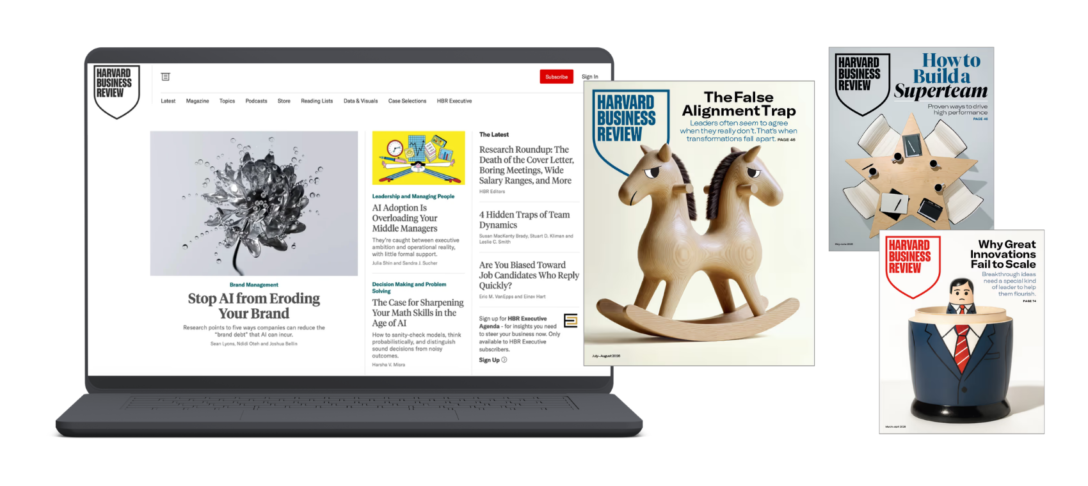
From premium subscriptions to AI, Erika Heilman explains why growth depends on customer insight, disciplined strategy and knowing what not to pursue.

Erika Heilman will be speaking at FIPP World Media Congress in Madrid, 13–15 October 2026.
There can be a temptation in publishing to respond to disruption by doing more: launching new products, experimenting with new platforms and chasing new audiences. Erika Heilman thinks focus begins with saying no.
As Group Publisher and Senior Vice President of Harvard Business Review, she has helped shape HBR’s premium subscription strategy, including the launch of HBR Executive, a new $700-a-year offering for senior leaders. Before joining Harvard Business Publishing, she spent three decades in book publishing, giving her a front-row seat to another technological upheaval: the arrival of e-books.
We spoke to Erika about AI, premium subscriptions, audience segmentation and why disciplined choices matter more than chasing every opportunity.
Book publishing went through its own digital disruption. What lessons have you learnt from that experience?
After spending three decades in the book publishing industry, I jumped over to the magazine side of media. Although books and magazines are distinct industries with different business models, both have undergone profound digital transformations, so I often draw on that experience.
When I started my own imprint in 2011, e-books were being introduced into the market. Digital Book World launched and everyone in the industry was encountering the age-old existential question: is the print book dead?
Most publishers over-indexed on e-books, which ultimately settled into an alternate digital format and nothing more. The lesson is not to do the same with AI – to over-index on the disruption of today before it has had a chance to mature.
AI is incredibly important, both internally and for customer-facing value, but we’re still learning where it will prove most valuable.
Has that experience changed how you think about diversification more broadly?
For almost a decade, I have been part of the commercial team at Harvard Business Publishing, of which the HBR Group is one of three market units.
In that way, HBP is a portfolio business designed for resilience, thereby managing risk: when one unit is down, chances are the others can compensate. The HBR Group has also operated as a portfolio business – across subscriptions, advertising, book publishing and licensing – with the same rationale.
In recent years, however, we’ve witnessed more vulnerability across all lines of business, and we’ve had to rethink our revenue diversification strategy accordingly. It is no longer about a suite of viable revenue streams but about differentiated and durable offerings that are less vulnerable to disruption.
HBR uses the Playing to Win framework internally. How does that shape the decisions you make?
Playing to Win is a terrific framework that we originally published in book form in 2013 and is one of several key strategy frameworks we use internally.
Your question points to perhaps the hardest question among the five: “how to win”.
It is tempting to chase all ideas, particularly if you have optimistic, can-do employees whose default is to say “yes” – an admirable quality.
The harder part of “how to win” is to stay disciplined about what to say “no” to and focus on the activities that are differentiated and hard for competitors to displace.
At HBR, we’ve worked hard to institute a Stop/Start/Continue mentality so that we are focusing on the things that will create future growth and saying goodbye to activities that got us to this point, recognising that they served us well but won’t create our future.
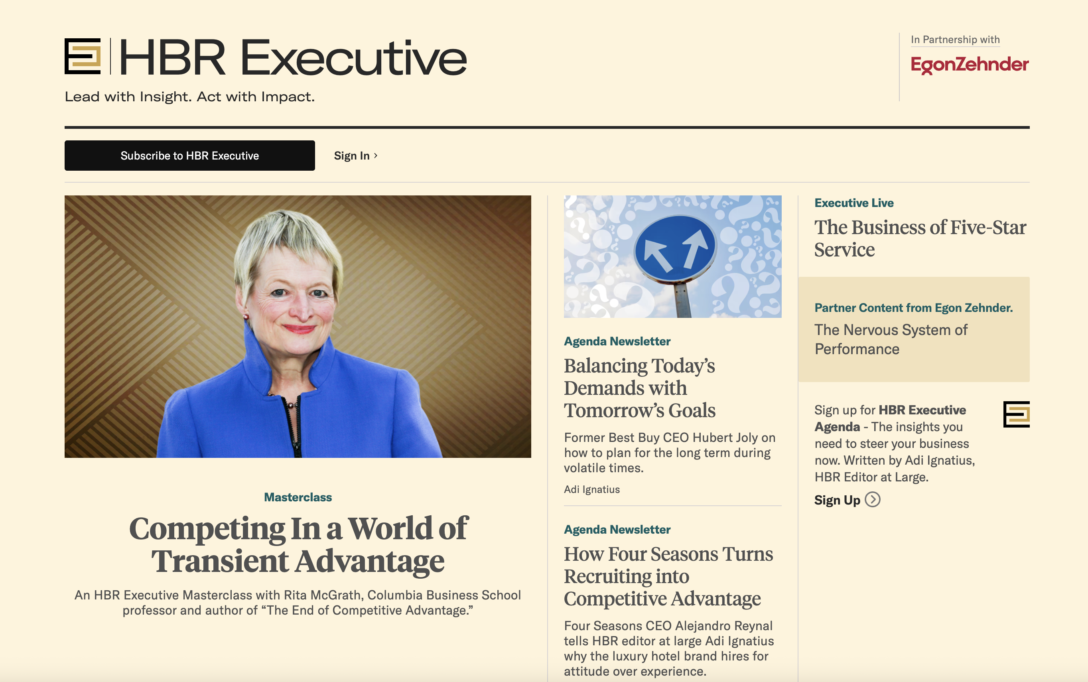
HBR Executive launched this year. How has the early response compared with your expectations?
When we launched HBR Executive, we did view it as a big bet, but not so much on the risk side as on the reward or opportunity side.
We had conviction about our “right to win” with C-suite executives because we were already delivering significant value to this customer segment. And yet we had a hunch we could super-serve them in ways that were differentiated from the competition, given our access to the research and scholarship at Harvard Business School as well as our deep bench of subject-matter experts in business and management.
Although the $700 price point represented an offering in a new stratum, we were pleasantly surprised to see so many existing HBR subscribers upgrade, which signalled pent-up demand. So far, this big bet has paid off, but we are also well aware that we need to continue proving that value through the offering.
What helped you identify that opportunity within HBR’s existing audience?
Building on the Playing to Win framework, this one is a “where to play” question, and it’s really important to get clarity around that.
Your primary customer is one you should already have a deep relationship with that you can develop further, and they need to have a willingness to pay.
This past year, HBR devoted significant resources towards a customer segmentation project that not only told us about the basic demographics and firmographics of our customer base, but also about their traits and what makes them tick.
That was the key to unlocking our growth strategy.
No matter which segment you land on, it’s preferable to serve a customer base that is a deep well, than to try to serve the ocean.
Not every publisher has Harvard’s brand behind it. What can others still learn from HBR’s approach?
It is true that having the Harvard brand behind us grants us instant credibility, which is incredibly valuable, particularly in an age where trust is under threat. But if brand equity was the ballgame, we wouldn’t be in business.
Establishing trust with our audience is much more about the ideas we acquire and the editorial point of view we bring to them than it is about the brand.
Going back to my book publishing roots, you could call this “the promise to the reader” – are you delivering a credible, high-quality product to your customers consistently and reliably? Are you solving problems for them in meaningful ways?
If so, the trust follows regardless of brand equity. And any publisher can work towards that end.