“The value proposition is not the same”: Linda Thomas Brooks on making media’s value visible
As AI changes how audiences find information, Linda Thomas Brooks argues that publishers need to stop treating trust as a soft editorial value and start recognising it as a fundamental part of the business model.

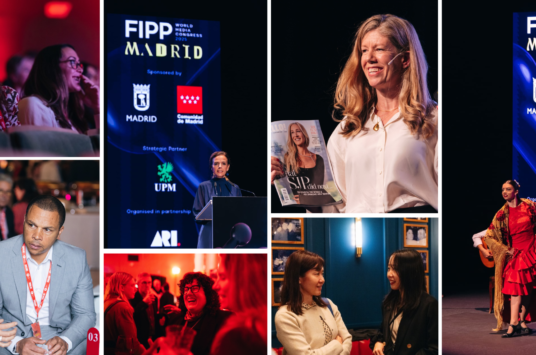
Linda Thomas Brooks will speak at the FIPP World Media Congress, 13-15 October 2026, in Madrid, Spain
Linda Thomas Brooks has spent years talking about publishers’ value in terms of expertise – but now she is trying to stop herself.
“Expertise is actually becoming a bit of a commodity in the day of AI,” says the media consultant and former CEO of MPA – The Association of Magazine Media. “I don’t need to go find an expert. So what replaces expertise is trust, right? And trust can’t be replicated by an LLM.”
It is an idea Linda will explore at FIPP World Media Congress this October, drawing on research into trust, media literacy and consumer behaviour as well as a career spanning advertising, publishing and industry leadership.
Trust as an economic incentive
Linda wants publishers to think about trust “as a parallel to an economic incentive… not a separate thing”: “If you’re a media brand and you’re trying to keep consumers in your network, in your audience, having that element of trust is really part of the long-term approach to keeping people – the lifetime value of that consumer.”
That doesn’t mean pretending media businesses don’t need to make money, and she says audiences understand that publishers are businesses: “Consumers get it.” The important thing is that their interests do not disappear behind the publisher’s commercial ones.
“I understand you. I know why you come to my property for whatever it is – information, recipes, medical stuff, whatever – and I am going to keep your interest in mind alongside my own economic interests.”
That relationship, she says, becomes particularly valuable when audiences have an almost unlimited choice of places to spend their time.
“If I have an hour to spare today, I don’t even know how many places I could go,” Linda says. “Magazines, books, I can just watch YouTube, social channels – there’s lots of content options.”
With so many competing options, the challenge is to become one of “the voices that stay in my head as a valuable place, a place that I will return to”.
“That trust relationship helps both audience growth and retention,” she says.
Making the process visible
Linda believes one obstacle is that people outside the industry often have little understanding of what goes into professionally produced content.
Through her work in media literacy, she has seen how differently people respond once the process is explained. “People who aren’t steeped in the media world don’t think about the underpinnings of the media business,” she says. “It’s not transparent to them. And once it is, they think about it differently.”
That matters when professionally produced publishing increasingly sits alongside content produced in very different ways.
“Journalistic enterprises, unless you’re an opinion writer, you don’t get to just sit at your keyboard and write something and have it published. It goes through a process. It goes through an editor. It might go through a fact checker. Somebody might call your sources and check the information and the quotes .”
At MPA, they discussed adding what some called a “nutrition label” to an article. One publisher called it something Linda prefers: the “nerd box”. It could show how many reporters worked on a story, how long it took and how many people were interviewed – making visible some of what differentiates professionally researched, written and edited content.
“How do publishers show that what goes into their information is worthy of more consideration – economic, time spent, attention, all of that?”
The same applies, she says, to the distinction between a journalist and “a person with a phone”. An individual observer may be entirely accurate, but they are capturing one perspective at one moment. A journalist will ask: “What did I miss? What did it look like from other views? Who are the other people involved?”
“I think it’s incumbent on media people to explain that, because the value proposition is not the same.”
Put people behind the brand
Linda has also watched editors and journalists increasingly move out from behind the scenes, appearing on podcasts and video, reporting from events and speaking directly to audiences. “It’s showing people your passion for and knowledge about whatever it is you’re covering.”
For some, that is an uncomfortable shift. “Some people are like, ‘There’s a reason I’m a writer. I don’t want to be on camera.’” But it does not necessarily mean turning every journalist or editor into an influencer: “In whatever way is authentic to that person, that’s a great way to show the value.”
That value is already there. “Especially when you talk to people on the edit side of the magazine business, they tend to be crazily dedicated people to whatever it is they’re covering – music, food, fashion, literature, whatever.”
When discovery changes
AI adds another dimension. “The game is being played whether we like it or not. And there are aspects of the way it’s being played that I don’t love. I wouldn’t design it that way, but I don’t get to decide,” she says. “What carries more weight is, again, trusted, credible sources. Publishers are those sources.”
Search referrals may fall as audiences receive answers directly from AI tools, but Linda believes repeatedly appearing as a credible source could create a different kind of value.
“If people start to see your brand referenced a lot – that your publisher brand and your magazine brand shows up repeatedly as a key source – that is how you continue to have brand recognition and brand value.
Of course, it may not be a direct click because they’re getting the answer they want without having to click.” Over time, that repeated visibility can still build recognition: “Every time I look up this thing, I see this magazine name. I see this writer. They must be something I should check out,” she says. “We’re going to have to figure out how to continue to enhance that long-term value because the initial clicks, for sure, are dropping like a rock.”
Back to brand
Linda also sees a parallel in the shift from brand to performance advertising.
“It wasn’t that it switched from one platform to another,” she says. “It switched from one type of advertising to another. It switched from brand to performance.”
The distinction matters to publishers because “performance advertising doesn’t stand on its own well… It needs to operate on that base of brand.”
For Linda, revisiting those fundamentals also means publishers taking another look at what they already have. “I hope it helps them see value in their core property,” she says of her Congress session.
“There was a time where the whole industry got focused on the shiny thing and a lot of publishers were like, ‘Well, we just have a million readers a month in a magazine.’ Well, okay – that’s hugely valuable.
“And now, [it’s about] figuring out how to instill or reinforce critical consumer trust, to use that to be able to move forward. Helping credible media brands thrive matters — not just as individual businesses, but to our world. I’m here to help them thrive.”