TED’s Cyndi Stivers: Why curiosity is still one of media’s greatest strengths
From hot-type newspapers to cool-kid magazines, from Time Out to TED, Cyndi Stivers reflects on curation, global audiences and why great stories will always depend on human judgement.

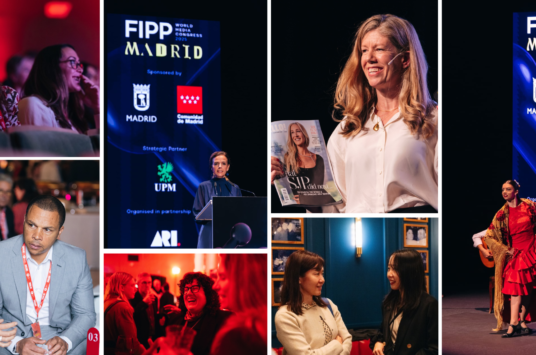
Cyndi Stivers will speak at the FIPP World Media Congress, 13-15 October, in Madrid, Spain.
Cyndi Stivers began her media career in a New York City newsroom where stories were still printed using hot type. At the same time, she was taking programming classes at college, convinced that the way newspapers were being made was not going to last.
“I was just always curious to learn how to use the new tools,” she says. Before long, she had become the person in the newsroom asking: “‘Hey, there’s this new software. Should we try it?’”
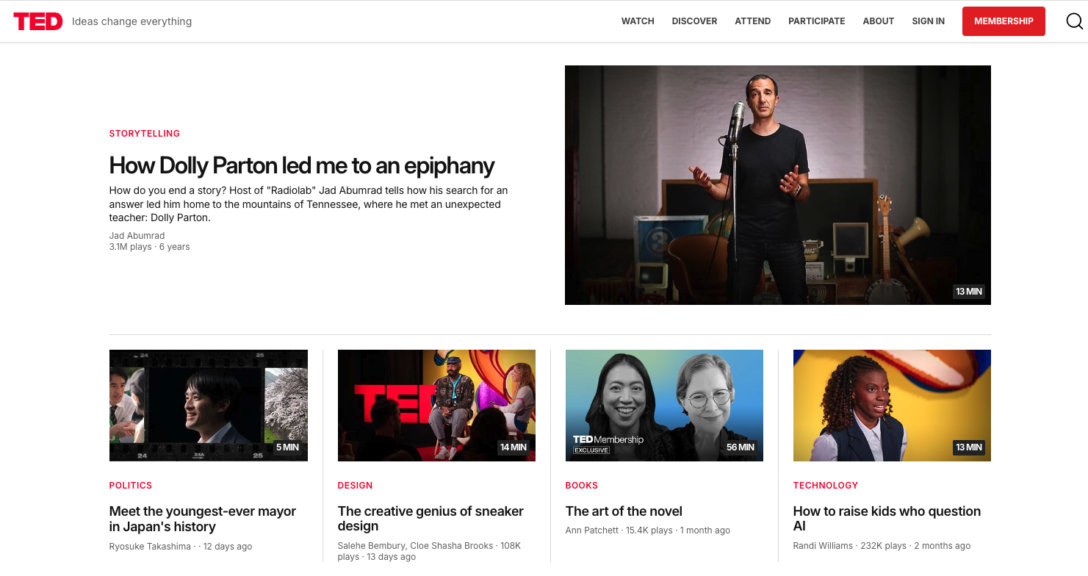
That curiosity continued through magazines, the launch of Time Out in North America, early digital publishing and several media startups. She taught Columbia Journalism School’s first digital magazine workshop and helped shape early industry guidelines for internet publishing. Today, as Director of Curation at TED, she applies much of the same editorial thinking to ideas and speakers from around the world.
She has also learnt not to get too comfortable. “When I feel like I know how to do it, or that I’m repeating myself, I definitely try and scare myself to death again.”
At FIPP World Media Congress, she will draw on that experience as she explores how TED curates and develops ideas for a global audience.
A human magazine
Cyndi’s role at TED combines management – “solving problems, making things run more smoothly, finding the tools that make it work faster, easier for everybody” – with something much more familiar from her magazine career.
“Curation is basically editing a human magazine,” she says.
The comparison is partly about sequencing. “TED has always had that sort of smorgasbord approach to content. There’s a scientist next to a comedian next to a poet next to a surgeon. It’s really super fun to figure out that flow – it’s very much like programming an issue of a magazine, which I love.”
The format may be different, but she sees the underlying editorial aspect as familiar. “It’s storytelling writ large,” she says. “It’s the same skill, just on a larger canvas and a longer time scale.”
Programming to the zeitgeist
When Cyndi is looking at ideas that might resonate months from now, she is cautious about relying too heavily on metrics.
“You can’t use them to tell you what’s going to happen,” she says. “You can look at Google Trends… but that’s very short-term. You can’t figure out what is going to be an amazing talk six months from now just by looking at a data-based source.”
Instead, she believes successful curation combines evidence with judgement. “A lot of it still, I think, is instinct.”
One pattern she has seen repeat is how audiences respond to periods of instability. She remembers one of Time Out New York’s best-selling issues after 9/11 being devoted to sleep, at a time when many people were struggling with anxiety and insomnia.
“The instability everyone feels [now] and that sort of global unease and anxiety… is very like post-9/11,” she says. “We discovered the same sort of hungers at times like this. So to some degree you can programme to the zeitgeist.”
Ideas that travel
That instinct also shapes how TED thinks about a huge international audience. Rather than looking for one demographic profile, Cyndi sees a shared set of motivations.
“Our audience is so big and so global,” Cyndi says, “and the things that unite them are that they all are looking for hope and good information and reasons to try and help find solutions.”
That common ground, she says, is less about geography than outlook. “There are people who watch TED Talks because they want to do better in their career,” she says. “But mostly, it’s curious people who care about the future.”
That also sets some boundaries around the tone. “They aren’t going to get the rants, the angry diatribes,” she says. “We’re not going to give them that. They can get that in a lot of other places.”
For Cyndi, the key is offering something constructive: “How can we give people a nugget of wisdom, a fresh perspective, or new information that they will find useful?” Metrics offer clues after the fact, she says, but “there’s no science to it. Humans still need to discern what works and why.”
A human metric
One of the examples Cyndi plans to discuss at Congress shows how that global approach is evolving.
For years, TED has built a volunteer translation community around its talks. Translators can choose the talks they want to work on, with translations passing through a rigorous review process before publication. Across the programme, TED has translations in more than 100 languages.
The fact that translators choose for themselves which talks to work on gives Cyndi another way of seeing what travels. “They could watch what was being published and say, ‘I’m going to do that one, and that one,’” she says. “It’s another metric – a human metric.”
More recently, TED has begun building on that work through AI dubbing. The technology can take a talk originally delivered in English and reproduce it in other languages, but the process still relies on human-reviewed translations.
“We only do it, to be clear – and this is a big point I’ll make – with the speaker’s consent,” Cyndi says. “The dubbing is informed by the original transcript in that language that is done by our humans, or approved by our humans. The growth of our non-English audience has been unbelievable – and the technology is getting better by the month.”
What people missed
TED’s model was tested in a very different way during the pandemic.
The organisation had deep experience in live events, but much less in remote talk production. At the same time, a significant part of its revenue depended on people paying to gather in person and on sponsors paying to reach them.
“That was a huge challenge,” Cyndi says. “We had massive expertise in live event production. We did not have massive expertise in remote talk recording.”
The experience also revealed what audiences missed most. “What was really sorely missed during the pandemic was that in-person gathering,” she says.
Even during virtual broadcasts, “people would show up and talk to each other because they knew each other from TED”. Cyndi herself still has close friends she first met through TED some 25 or 30 years ago.
“I think there was a recognition that we need to feed that community piece,” she says.
Exactly what that looks like is still evolving. “Everybody in the media business is now getting into events, in case you haven’t noticed.”
What still needs solving
Asked what excites her most now, Cyndi returns to technology. “It’s various AI applications that can help make our jobs easier to do, quicker to do and less expensive to do to try and keep the quality information production funded,” she says.
But alongside those opportunities is another question she wants to see solved: how audiences know what to trust.
“I just keep hoping that some baby genius out there is going to solve how people starting out now can be confident the information they’re getting is trustworthy.”