“This is the new world”: Why publisher-creator relationships matter more than ever
Christian Toksvig on creator media, legacy brands and how publishers can use their strengths to build new kinds of partnerships.


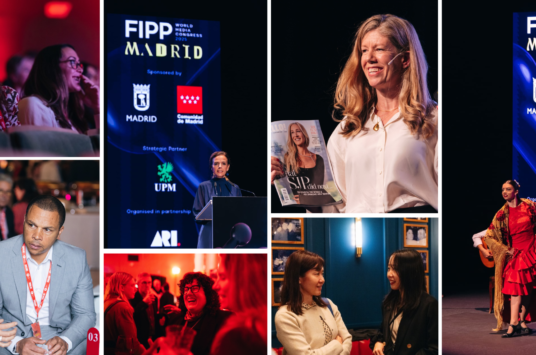
Christian Toksvig will speak at the FIPP World Media Congress in Madrid, 13-15 october 2026
After years in the magazine industry, Christian Toksvig, Co-Founder & CEO, Cocoa Media, moved into digital media, then television and streaming, helping launch and manage services including HBO Max in Europe. More recently, his work has focused on how established media brands can work with creators.
“The individual connection between creator and fan base, or creator and community, is to some extent cutting out the traditional gatekeepers, like us, like the magazines or like the TV stations,” Christian says. “This is the new world.”
The new media companies?
Creator-led businesses have grown into significant media companies in their own right. “Big studios are created off the back of YouTube, off the back of Instagram,” says Christian. “These are really the new media companies.”
Traditional publishers may have established brands and active social accounts, but Christian says the relationship with audiences is different.
“They are brands, not people typically,” he says. “You are following this person who feels like your friend. A very different language, a very different type of communication.”
What do publishers have that creators need?
Christian’s Congress presentation will draw on recent work exploring how a special-interest publisher can collaborate with creators rather than compete with them.
Publishers may have decades of authority in a subject, while creators often have much larger social audiences. In exploring how the two could work together, Christian began by considering what publishers could offer in return for creators’ reach and content.
“We know what we want,” he says. “We want the creators’ traffic, we want their content.”
Publishers, meanwhile, have established brands, editorial teams, production capability, distribution, events experience, marketing infrastructure and sales teams.
“These are difficult to do if you’re a small creator business,” he says. “A creator usually just has a camera and a production guy. That’s it. But that means it’s hard for you to do events. It’s hard for you to do a lot of marketing. It’s hard for you to do sales.”
Collaboration, not competition
A legacy media brand and a creator may serve the same audience without offering the same kind of content. The media brand may bring specialist knowledge and authority; the creator may be better placed to communicate personality, experience or how something feels.
“Both are really valuable types of content,” Christian says. “They don’t really overlap or compete with each other.”
Creators also saw value in the association. “The interest was huge because they know the brand and they respect the brand.”
Publishers: not just another customer
One early lesson was that creators and their agents may initially treat publishers like any other commercial client, rather than a media partner.
“They will say, ‘Speak to my agent’,” Christian says. “He just sees you as another customer. He sees you like he would see H&M or McDonald’s coming through the door.”
The first task, he says, is to reframe the relationship. “You have to make them understand that you’re not a customer. You are a fellow creator.”
Attention has already moved
Christian says he’s noticed a shift in his own media habits.
“Before, 10 or 15 years ago, I would switch on the live signal for the BBC or ITV,” he says. “Five years ago, I would watch Netflix and HBO. Now I’m probably watching YouTube.”
He often asks executives how much time they spend watching or reading on their phones. “Everyone’s like, all the time,” he says. “So why do you expect your viewers or your readers to only consume your medium?”
He sees a disconnect between publishers’ own behaviour and what they expect from audiences. “You’ve just told me that you actually spend more of your time on the phone. So why don’t we start there?”
Different kinds of trust
Traditional media brands bring authority and accuracy; creators may build trust through personality and familiarity. “They trust creators more,” Christian says. “That’s why they listen to news podcasts by creators instead of the Today programme.”
Accuracy, however, is not the only factor shaping those relationships. “Authenticity is probably, in some ways, more [important] than accuracy”, he says. “Life is about more than accuracy. It’s also about feeling and emotion.”
For publishers, the opportunity is to combine those different strengths rather than trying to replicate the creator relationship.
A different role for publishers
Christian sees the changing relationship between creator, audience and publisher as one of the fundamentals of media’s future.
“All communication, all media, is about a sender, a creator, and a receiver,” he says. “We collectively in the room at FIPP have created the connector that sits between those two.”
But creators can now reach audiences more directly. “So I think traditional media companies’ influence is on the way down.”
That leaves publishers with a different role to play.
“Our job is to find other ways to be useful, to help creators get their points of view out, to find audiences, because that still needs doing,” he says. “But I think it’s going to be in a different incarnation.”
At Congress, he hopes to hear how publishers are using their existing strengths to create new models. “I would like to hear about real innovations,” he says. “About how these brands are using the strength and the legacy they have to create something that is new, exciting, gets attention and makes money.”